
Frequently asked questions about our guided walking tours in Japan
Our guided walking tour FAQs cover fitness, accommodation, regional food, packing, bookings and what to expect each day in Japan.
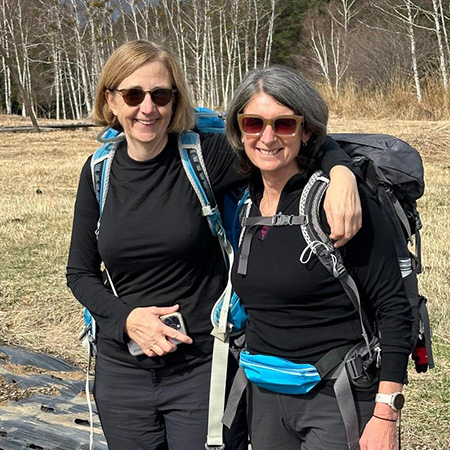
If you have a question about your circumstances or a particular departure, please contact us. Alison and Carolyn will be happy to discuss it with you.
About our guided walking tours
Which guided walking tours do you offer?
We offer a guided Kumano Kodo and Koyasan tour and a guided Nakasendo and Kiso Valley tour.
The Kumano Kodo tour follows the sacred Nakahechi pilgrimage route and includes time in the UNESCO World Heritage-listed Buddhist temple complex of Koyasan. The Nakasendo tour combines historic post towns, forest trails and the mountain landscapes of the Kiso Valley.
How many people are in a tour group?
Our groups are deliberately kept small so the experience remains personal and each guest can receive individual attention. Group size may vary between departures, so please refer to the relevant tour details or contact us for current information.
Alison and Carolyn both guide every tour, providing two guides regardless of the final group size.
Who are Alison and Carolyn?
Alison and Carolyn are Australian friends who met at university and share a longstanding connection with Japan. Both speak Japanese and have been guiding walking tours through regional Japan since 2015.
Their friendship helps create the relaxed atmosphere of the tours, while their language skills, cultural knowledge and local relationships provide guests with a deeper and more personal experience of Japan.
Do I need to speak Japanese?
No. Alison and Carolyn both speak Japanese and assist guests when communicating with innkeepers, restaurant staff, transport providers and other people encountered throughout the tour.
You are welcome to learn a few Japanese words before travelling, but Japanese-language ability is not required.
What is the difference between your tours and a self-guided walk?
A self-guided tour generally provides accommodation, luggage transfers and route information while leaving you responsible for navigation, transport connections and daily decisions.
A Kumano Camino tour includes two Japanese-speaking guides, small groups, day-to-day logistical support and historical and cultural interpretation. Alison and Carolyn are also present to help if conditions change or a problem arises.
Read our full comparison of guided and self-guided walking tours in Japan.
Why are there two guides on every tour?
Having two guides provides greater flexibility and more individual attention. It helps Alison and Carolyn support different walking paces, respond when someone needs assistance and continue looking after the rest of the group if plans need to change.
Walking, fitness and preparation
How fit do I need to be?
A reasonable level of walking fitness is required. These are walking holidays rather than endurance events, but the routes include hills, extended ascents and descents, uneven stone surfaces, exposed roots and consecutive days of walking.
Regular preparation will make the experience more comfortable and enjoyable. If you have concerns about your fitness or mobility, please contact us before booking.
How far do we walk each day?
Daily distances vary according to the route and itinerary. Distance alone does not indicate difficulty, as gradients, trail surfaces, weather and the amount of climbing can significantly affect the walking experience.
The relevant tour page and itinerary provide information about the approximate distance and elevation for each walking day.
How difficult are the trails?
Both routes include uneven and sometimes steep terrain. You may encounter stone paving, loose rocks, tree roots, steps, forest paths and sustained uphill or downhill sections.
The difficulty varies from day to day. Our What to Expect page provides more detailed information about trail conditions, distances and gradients.
Do you accommodate different walking paces?
Small groups and two guides allow greater flexibility than would usually be possible with one guide. Alison and Carolyn are usually able to support different walking paces while keeping the group safe and ensuring the day’s itinerary remains on schedule.
Guests should still be prepared to walk as part of a group and complete the scheduled route within the available time.
What happens if I cannot complete a day’s walk?
Please speak with Alison and Carolyn as soon as you feel unwell, injured or unable to continue. They will assess the situation and help determine the most appropriate option.
Alternative transport may sometimes be available, but this depends on the location, road access and the stage of the walk. Some remote sections cannot be exited easily.
What do I carry while walking?
You will normally carry a day pack containing water, rain protection, personal medication and anything else you may need during the day. On some tours, you may also need to carry overnight essentials for one or occasionally two non-consecutive nights.
See “Is our luggage transferred between accommodations?” below for more information about luggage arrangements.
A detailed packing list is available on our Getting Ready page and will also be discussed during the pre-tour information session.
Do the tours continue if it rains?
Walking tours may continue in wet weather when conditions are considered safe. Guests should arrive with appropriate waterproof clothing, footwear and protection for anything carried in their day pack.
If severe weather or trail conditions create a safety concern, Alison and Carolyn may adjust the day’s plans.
How should I train for the tour?
Preparation should include regular walking, gradually increasing distances and consecutive walking days. Training on hills, stairs and uneven surfaces is particularly valuable.
Our Getting Ready page provides practical guidance about building endurance, training on hills and preparing your equipment.
Accommodation, meals and tour logistics
What kind of accommodation do you use?
Tours use a carefully selected combination of traditional Japanese ryokans, less formal minshukus and Western-style hotels.
Accommodation is chosen for its location, hospitality, food and contribution to the overall cultural experience. Facilities and room styles vary, particularly in smaller regional communities.
Is our luggage transferred between accommodations?
Luggage arrangements are included in the planning for each tour. On walking days, guests carry a day pack while their main luggage is usually transported according to the itinerary.
Due to logistical constraints on some tours, guests may need to carry overnight essentials in their day pack for one night or, occasionally, two non-consecutive nights.
Please check the information provided for your departure, as luggage arrangements vary between tours.
Will every room have a private bathroom?
Not necessarily. Traditional accommodation in regional Japan may have shared bathing facilities and toilets, although room arrangements vary between properties.
The experience of staying in ryokans and minshukus is an important part of the journey. Please contact us before booking if you have particular accommodation requirements.
Will I need to use an onsen?
Some accommodation provides traditional communal bathing facilities. These are separated by gender and have established bathing etiquette.
Alison and Carolyn explain what to expect so guests can approach the experience with confidence. Facilities vary between accommodations, so please discuss any concerns with us before booking.
What meals are included?
Accommodation, transport during the tour, almost all meals and admission to the places visited are generally included. On one or occasionally two walking days, guests may purchase an inexpensive picnic lunch from a convenience store.
Exact inclusions vary between tours and are listed in the relevant itinerary.
What kind of food will we eat?
Meals are an important part of the Kumano Camino experience. Depending on the accommodation and region, guests may enjoy traditional multi-course dinners, local specialities, Japanese breakfasts and simple picnic lunches on walking days.
Alison and Carolyn carefully select accommodation and dining experiences to help guests discover regional Japanese food and hospitality.
Can you accommodate dietary requirements?
Regional Japanese inns may have limited capacity to alter traditional menus, and some dietary requirements cannot be accommodated in every location. Options may be particularly limited for guests with coeliac disease or those following a strict vegetarian diet. Soy sauce and fish stock are widely used in Japanese cuisine, and most meals – including breakfast – feature fish or seafood.
Please advise us of any allergies, intolerances or dietary requirements before booking. Alison and Carolyn will communicate your requirements to the relevant accommodation and meal providers. Discussing your needs early allows them to determine what can be accommodated and provide realistic guidance before you book.
Can solo travellers join a tour?
Yes. Solo travellers are welcome and often enjoy the companionship and security of travelling with a small group.
Room-sharing arrangements and single-room availability vary between departures. Please review the relevant tour information and contact us before booking if you have questions about room arrangements.
Can I request a single room?
Single rooms may be available for some nights or departures, but traditional regional accommodation does not always offer Western-style single-room arrangements.
Some departures may require guests to share on certain nights while providing a private room on others. Any room-sharing conditions will be clearly identified in the departure information.
Bookings and travel arrangements
What is included in the tour price?
The price generally includes accommodation, transport during the tour, almost all meals, admission fees and the services of Alison and Carolyn as your two guides.
Each itinerary contains the exact inclusions for that departure. Flights, travel insurance and personal expenses are not included unless specifically stated.
Are international flights included?
No. Guests arrange their own flights to and from Japan.
The Getting Ready page provides information about reaching the tour’s starting point. Please confirm the departure details before making non-refundable travel arrangements.
Where do the tours begin and finish?
The starting and finishing locations depend on the tour and departure. These details are shown on the relevant itinerary and upcoming tour listing.
Guests are responsible for reaching the nominated meeting point, but Alison and Carolyn provide practical information to help with planning.
When is the best time to walk in Japan?
Kumano Camino tours are scheduled during seasons that are generally well suited to walking, including spring and autumn. Conditions can still vary considerably between regions, elevations and individual departure dates.
Guests should prepare for changing temperatures and the possibility of rain regardless of the season.
How far in advance should I book?
Places are limited and tours can fill well before departure. We recommend booking as soon as you find a suitable tour rather than waiting for the departure date to approach.
Current availability is displayed on our Upcoming Guided Walking Tours in Japan page.
How do I book a tour?
Begin by choosing a suitable departure from our Upcoming Guided Walking Tours in Japan page. Review the itinerary, availability, dates, price and room arrangements before continuing to the Tour Booking Form.
Alison and Carolyn will review the information you submit and contact you about the next steps.
Do I need travel insurance?
Yes, all walkers on a Kumano Camino tour must take out comprehensive travel insurance. Before the tour start date we will ask you to provide us with details of your comprehensive travel insurance including the name of your travel insurer, policy number and a contact number for the insurer in the event of an emergency.
Review the booking terms and insurance requirements carefully and arrange cover as soon as appropriate after booking.
What happens if I need to cancel?
Cancellation conditions, payments and any applicable charges are explained in the Terms and Conditions.
Please read these conditions before submitting your booking and contact Alison and Carolyn if anything is unclear.
What should I pack?
You will need suitable walking footwear, layered clothing, wet-weather protection, a comfortable day pack and other practical items for consecutive walking days.
Our Getting Ready page includes detailed packing lists for the Kumano Kodo and Nakasendo tours.
Can I speak with someone before booking?
Yes. Alison and Carolyn welcome questions about fitness, dietary requirements, accommodation, room sharing or any other aspect of the tour.
Please contact Kumano Camino if you would like to discuss whether a particular departure is suitable for you.